
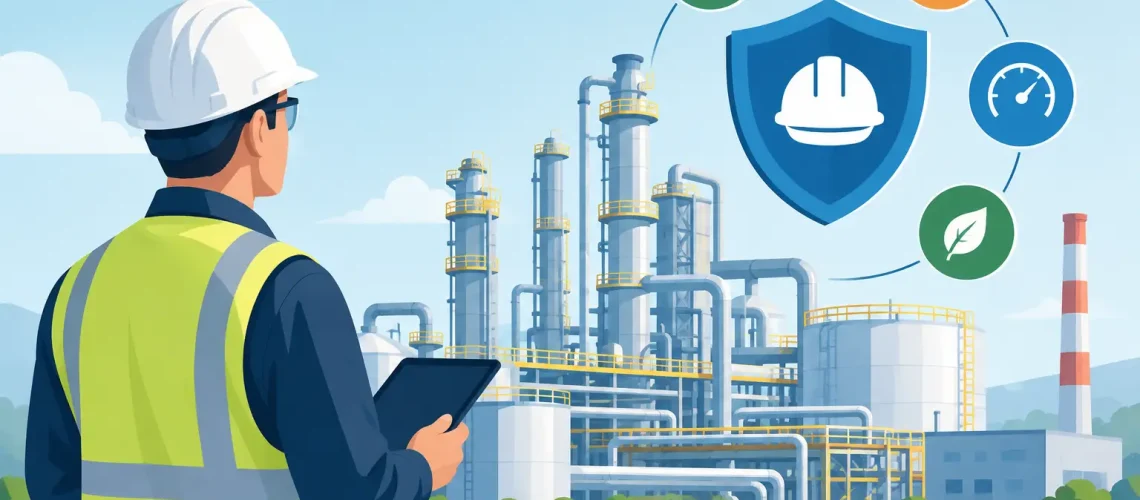
A curing oven that reaches the right temperature but creates an uncontrolled heat buildup is not performing successfully. A washer that delivers sanitation results while leaking chemicals or overloading its electrical circuit is not a reliable asset. Process safety is the discipline that ensures industrial equipment, energy sources, materials, and operating procedures work together without creating a major hazard.
For facilities that rely on heating, drying, curing, washing, sterilization, or chemical application, process safety is not separate from productivity. It is part of how production stays predictable, equipment lasts longer, and operators can carry out their work with confidence.
What Process Safety Means in an Industrial Facility
Process safety focuses on preventing incidents caused by the loss of control of hazardous energy, pressure, heat, chemicals, combustible materials, or automated equipment. It considers the entire system: machine design, utility connections, control logic, operating limits, maintenance practices, and the people responsible for daily operation.
This differs from personal safety, although the two are closely connected. Personal safety may address slips, manual handling, protective equipment, or safe behavior around machinery. Process safety asks a wider question: what could happen if a furnace overheats, a spray booth ventilation system fails, a safety interlock is bypassed, or a chemical dosing line delivers more product than intended?
The answer depends on the application. In a food operation, the immediate concern may be contamination or inadequate sanitation. In automotive finishing, it may involve flammable vapors and ignition sources. In electronics or aerospace production, inconsistent curing conditions can affect product quality long before a visible equipment failure occurs. Good engineering recognizes these differences rather than applying the same solution to every facility.
Start With the Process, Not Just the Machine
A machine can include quality components and still introduce risk when it is poorly matched to the process. Safety decisions should begin with a clear understanding of what enters the system, what happens inside it, and what leaves it.
For a thermal process, that means defining the product load, temperature range, heating method, airflow requirements, cycle duration, exhaust needs, and allowable variation. For a washing or sterilization process, it means considering water supply, drainage, detergent or disinfectant concentration, loading patterns, and hygiene requirements. The goal is to identify normal operating conditions as well as credible abnormal conditions.
For example, an industrial oven may be designed for a specific batch size and airflow path. If a facility later loads denser parts, blocks circulation, or changes coatings without reviewing the operating parameters, the original safety assumptions may no longer apply. Equipment should be adaptable where possible, but process changes still require engineering review.
Custom-built machinery can be especially valuable here because safeguards can be designed around the actual workflow, facility layout, material characteristics, and production target. That may include the location of access doors, loading trolleys, emergency stops, exhaust points, sensors, and operator controls. A generic machine may be less expensive at purchase, but it can create costly workarounds when it does not fit the process safely.
Build Protection in Layers
No single component can carry the full responsibility for safe operation. Reliable process safety uses layers of protection so that one failure does not automatically lead to an incident.
The first layer is inherently safer design. This can include selecting a lower-risk heating method, limiting available energy, separating ignition sources from flammable materials, or designing enclosed systems that prevent unintended operator contact. The best hazard is often the one removed before the machine is built.
The next layer is engineered control. Temperature controllers, high-limit cutoffs, airflow switches, pressure relief devices, door interlocks, extraction systems, alarms, and emergency stop circuits all serve different functions. A production controller keeps the machine operating at its required setting. An independent high-limit device is there to act when normal control does not perform as expected.
Administrative controls also matter. Clear operating instructions, approved loading methods, startup and shutdown procedures, lockout practices, and training help operators respond consistently. However, written procedures should support engineered protection, not replace it. A safeguard that depends entirely on someone remembering a step is less dependable than one built into the equipment.
Controls and Interlocks Must Be Functional, Not Decorative
Control panels are often the operational center of industrial equipment. They translate process requirements into measurable conditions and machine responses. A properly designed panel can monitor temperatures, cycle timing, motor status, airflow, alarms, and safety inputs while giving operators a clear view of the machine state.
The interface should make abnormal conditions understandable. If an alarm occurs, the operator needs useful information: what condition triggered the alarm, whether the machine has shut down safely, and what should be checked before restarting. A vague fault light may save space on a panel, but it can delay troubleshooting and encourage unsafe resets.
Interlocks deserve particular attention. They may prevent a door from opening during a hazardous cycle, stop heating when airflow falls below a safe level, or prevent spray operation until extraction is active. These features can affect throughput, especially when operators are under pressure to keep production moving. That is why interlocks must be practical, well explained, and maintained. When a safeguard regularly interrupts work for unclear reasons, people may be tempted to bypass it.
Maintenance Is a Process Safety Control
A safety device that is installed but not tested cannot be assumed to work. Sensors drift, wiring connections loosen, fan belts wear, filters clog, seals deteriorate, and mechanical switches can fail over time. In heat-processing equipment, poor airflow or inaccurate temperature sensing can change both safety conditions and product results.
Preventive maintenance should therefore include more than general cleaning and visual inspection. It should verify critical functions at defined intervals. A facility may need to test emergency stops, high-temperature cutoffs, door interlocks, extraction performance, alarm functions, electrical protection, and temperature accuracy. The exact schedule depends on duty cycle, operating environment, equipment type, and applicable site requirements.
Maintenance records are valuable because they show patterns. Repeated overheating alarms, frequent motor trips, uneven drying, or regular sensor replacement may point to a larger process issue. Treating each event as an isolated repair can keep a machine running temporarily while allowing the root cause to continue.
REK Engineering Machinery supports this approach by pairing engineered equipment with installation, maintenance, and technical support. The practical value is not only restoring a machine after a fault. It is helping facilities preserve the operating conditions the machine was designed to deliver.
Managing Change Before It Becomes a Problem
Many process safety failures occur after a change that appears minor. A new coating, detergent, product size, production rate, utility supply, shift pattern, or ventilation arrangement can alter the operating risk. Even relocating equipment can affect access, drainage, exhaust routing, or emergency response.
Before making a change, review what it means for process limits and safeguards. Ask whether the existing controls still suit the new material or production demand, whether ventilation capacity remains sufficient, and whether operators need revised instructions or training. For significant changes, involve the equipment manufacturer, maintenance team, process engineer, and facility safety personnel early.
This review does not need to become unnecessary paperwork. It should be proportionate to the risk. Replacing a like-for-like sensor is different from converting a drying oven to handle solvent-bearing products. The second change may affect ventilation, electrical classification, heating controls, and fire protection, so it deserves a more formal assessment.
Create a Reporting Culture That Protects Production
Operators often notice the first signs of process instability: unusual odors, inconsistent cycle times, vibration, abnormal noise, temperature fluctuation, or a safety device that trips intermittently. These observations are useful operating data, not inconveniences to ignore.
Facilities gain more from reporting near misses and recurring faults than from assigning blame after an incident. When technicians and operators can raise concerns without being dismissed, small issues can be corrected before they become downtime, damaged product, or injury. Plant managers should also close the loop by communicating what was found and what action was taken.
Clear accountability is essential. Operators need to know when to stop equipment. Supervisors need to know when a deviation requires escalation. Maintenance personnel need access to current drawings, settings, and service history. Engineering teams need feedback from the people who use the equipment every shift.
Process Safety Is a Long-Term Operating Standard
The strongest process safety programs are visible in ordinary decisions: how a machine is specified, how controls are labeled, how maintenance is planned, and how a process change is reviewed. They do not rely on a single annual inspection or a folder of procedures that sits unopened.
For industrial facilities, the practical objective is straightforward: keep hazardous conditions under control while delivering consistent output. When equipment design, disciplined operation, and ongoing service support reinforce each other, safety becomes a working part of production rather than an obstacle beside it.
The next useful step is to review one critical process at the point where heat, chemicals, pressure, or automated movement is introduced. That is often where a focused engineering conversation can prevent a future disruption.