A production line can lose hours each week because one critical task does not fit the equipment around it. A part may need a longer cure time, a wash cycle may require better drainage, or operators may be transferring loads manually between machines. Custom automation equipment fabrication addresses these practical gaps by building machinery around the actual process, product, layout, and operating conditions of a facility.
For manufacturers, hospitals, food processors, laundries, and hygiene-focused operations, the goal is not automation for its own sake. The goal is a safer, more consistent process that protects product quality, supports throughput, and remains maintainable over years of service.
When Standard Equipment Stops Being the Right Fit
Off-the-shelf equipment can be a sensible starting point when products are uniform, volumes are predictable, and the workflow matches a standard machine design. However, a standard oven, washer, dryer, spray booth, or sterilization unit may create constraints when the application has unusual load dimensions, changing batch sizes, strict hygiene requirements, limited floor space, or specific handling needs.
These constraints often show up as small but costly workarounds. Operators may use improvised racks. Materials may wait between stages because cycle times do not align. A machine may consume more energy than necessary because its chamber is larger than the load requires. In sanitation applications, hard-to-clean surfaces or poor water management can make consistent hygiene more difficult to achieve.
A custom-built system starts with the process rather than a catalog specification. It considers what enters the machine, what must happen during the cycle, how the item exits, and how the equipment will be cleaned, serviced, and controlled. That approach is particularly valuable where heating, drying, curing, washing, sterilizing, or coating must be repeatable from one shift to the next.
What Custom Automation Equipment Fabrication Involves
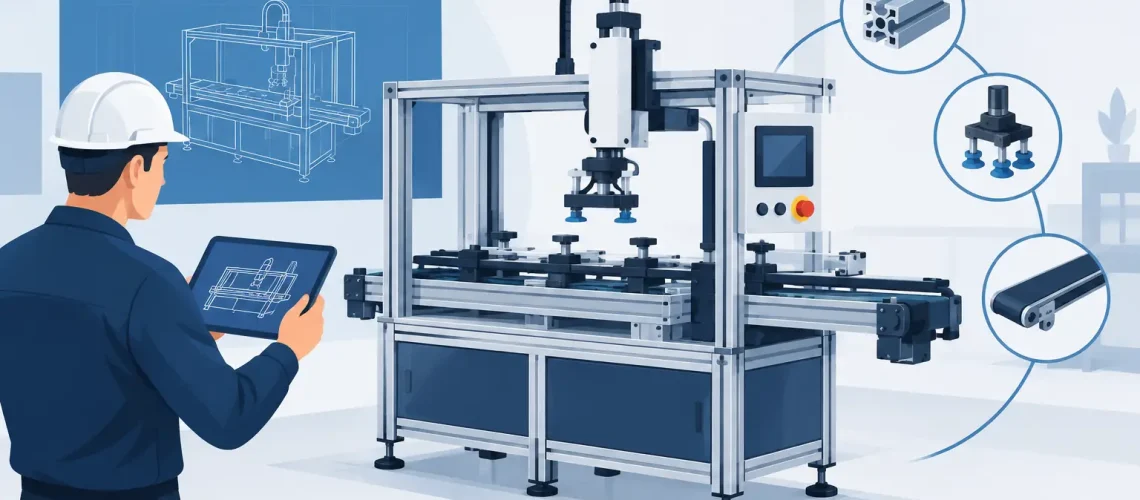
Custom automation equipment fabrication combines mechanical design, electrical engineering, controls, fabrication, and installation planning into one project. The result may be a standalone machine or an integrated cell that connects several process stages.
For example, a thermal processing system may require a purpose-built oven chamber, insulated doors, airflow design, a trolley or conveyor arrangement, temperature sensors, and an electric control panel programmed for defined recipes. A hygiene system may combine washing, rinsing, thermal disinfection, drying, and material handling in a layout designed around the facility’s contamination-control practices.
The fabrication work is only one part of the outcome. The engineering decisions behind it determine whether equipment will perform reliably in daily operation. These decisions include material selection, structural design, heater capacity, fan configuration, drainage, access panels, guarding, electrical protection, sensor placement, and the logic used to control each cycle.
Process Data Comes Before Machine Design
Good custom projects begin with operating data. This includes load size and weight, required temperatures, dwell times, humidity or airflow needs, utility availability, production volume, cleaning requirements, and the space available for installation.
The exact requirement matters. A drying system for washed carts has different design priorities than an oven curing coated automotive components. A hospital trolley sterilizer may prioritize sanitation assurance and ergonomic loading, while an electronics manufacturer may need controlled heating profiles that protect sensitive assemblies.
It also helps to identify future needs early. Building moderate capacity expansion into the controls or material-handling arrangement can cost less than redesigning the entire system later. At the same time, oversizing every component is not automatically beneficial. Larger chambers, heaters, and fans can raise capital cost and energy use without improving results.
Controls Turn Machinery Into a Repeatable Process
The control panel is where mechanical equipment becomes a controlled production asset. A well-designed panel coordinates heaters, blowers, pumps, motors, conveyors, alarms, interlocks, and safety devices. It gives operators a clear way to select a process, monitor machine status, and respond to exceptions.
For many facilities, recipe-based controls are especially useful. Operators can select validated settings for different products or load types rather than manually adjusting time and temperature on every run. Data logging, fault history, and status indicators can also support troubleshooting and maintenance planning.
The right level of controls depends on the application. Some operations need a straightforward, durable interface with clear alarms and manual override functions. Others benefit from programmable logic, remote monitoring, batch records, or communication with wider plant systems. More automation is not always better if it creates unnecessary complexity for the people maintaining the machine.
Design Priorities That Protect Daily Operations
A custom machine should make the process easier to run, not merely more impressive on a specification sheet. The best designs account for the realities of shift work, cleaning schedules, operator access, and service requirements.
Safety must be built into the equipment from the start. This can include thermal insulation, emergency stops, door interlocks, guarded moving components, over-temperature protection, proper electrical isolation, and clear operating controls. In equipment used for food, healthcare, laundry, or sanitation work, hygienic design also deserves close attention. Smooth accessible surfaces, appropriate material finishes, drainage paths, and cleanable construction help reduce areas where residue or moisture can accumulate.
Energy efficiency is another practical design consideration. Insulation quality, recirculated airflow, heater control, chamber sizing, and cycle programming all influence operating cost. Energy-conscious design does not mean reducing performance. It means applying heat, water, airflow, and electrical power where they are needed instead of wasting them through poor control or oversized equipment.
Maintainability is equally important. Components that are difficult to access can turn a simple repair into extended downtime. Service panels, standard electrical parts where suitable, clear wiring identification, and sensible placement of sensors and motors make long-term ownership more manageable.
Choosing a Fabrication Partner for a Complex Project
The supplier should be able to translate a process problem into an engineered solution, not simply modify a standard machine with extra features. Ask how the team gathers requirements, verifies assumptions, handles design changes, and supports commissioning after installation.
Experience across related applications matters because it helps the engineering team recognize risks before fabrication begins. For instance, airflow that works for light components may not heat dense loads evenly. A washer designed for general cleaning may not meet the access and drainage demands of hygiene-critical operations. These details are where project outcomes are often decided.
A capable partner should also be prepared to discuss trade-offs openly. Faster cycle times may require greater heating capacity. A smaller footprint may reduce loading convenience. Higher automation can improve consistency but may require more training and a stronger maintenance plan. Clear discussions before fabrication help prevent expensive changes after delivery.
At REK Engineering Machinery, custom projects are supported from equipment design and fabrication through installation, maintenance, and technical service. This continuity matters because the team responsible for building the machine understands the operating intent behind it.
Installation and After-Sales Support Are Part of the Build
A machine is not fully successful when it leaves the workshop. It must be installed safely, connected correctly, tested under real operating conditions, and handed over to a team that can run it with confidence.
Commissioning should verify key performance requirements, such as temperature stability, cycle sequence, safety interlocks, water flow, drying results, or material movement. Operators and maintenance personnel should understand normal operation, cleaning procedures, basic inspections, alarm responses, and the limits of the equipment.
After-sales support protects the value of the investment. Preventive maintenance can identify worn components, calibration needs, electrical issues, or airflow restrictions before they become production failures. It also creates opportunities to improve cycle settings as products, volumes, or facility requirements change.
Build for the Process You Need to Run
Custom fabrication is most valuable when it removes a persistent operational compromise. It can bring thermal processing, sanitation, washing, drying, curing, and handling steps into a controlled system that fits the facility rather than forcing the facility to adapt around a generic machine.
The right project begins with a clear view of the process, the people who operate it, and the performance that must be sustained over time. When those details guide the design, custom equipment becomes a dependable part of daily operations rather than another source of workarounds.