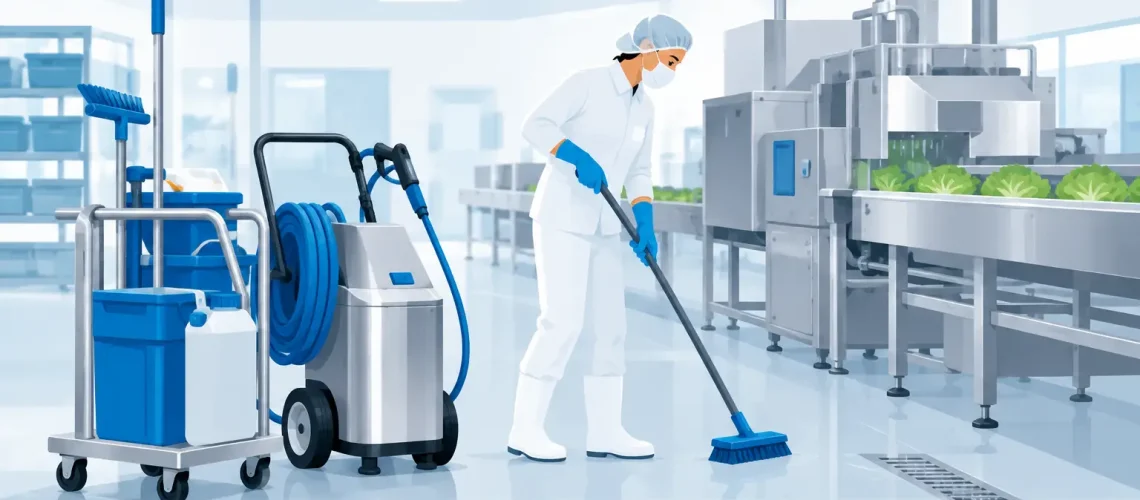
A sanitation failure rarely begins with one dramatic breakdown. More often, it starts with a wash area that cannot keep pace, a trolley that is difficult to clean thoroughly, standing water around equipment, or a manual process that delivers different results from one shift to the next. Sanitation equipment for food factories must address those everyday operating realities while protecting product safety, employee safety, and production uptime.
For plant managers and engineering teams, the right solution is not simply the machine with the highest stated capacity. It is equipment designed around the actual items being cleaned, the soil being removed, available utilities, drainage conditions, sanitation frequency, and the people who will operate and maintain it. When those details are considered early, sanitation becomes a controlled process rather than a recurring production risk.
Why Food Factory Sanitation Needs Engineered Equipment
Food processing facilities operate under pressure from multiple directions. Hygienic conditions must be maintained, but sanitation also has to fit around changeovers, shift schedules, labor availability, water use, chemical handling, and preventive maintenance. Equipment that is poorly matched to the workflow can create bottlenecks even when it appears adequate on paper.
A properly engineered sanitation system improves repeatability. Controlled wash cycles, appropriate spray coverage, reliable temperature management where required, and practical loading arrangements help teams achieve a more consistent result. This reduces dependence on individual technique and makes sanitation procedures easier to verify.
There is also a durability question. Food environments expose machinery to moisture, cleaning chemicals, temperature changes, and frequent use. Frames, panels, pumps, pipework, access doors, and electrical components must be selected and built for those conditions. A low initial purchase price can become expensive when corrosion, difficult access, or frequent repairs disrupt operations.
Start With the Sanitation Risk, Not the Product Catalog
The most effective equipment selection starts by defining what needs to be controlled. A bakery may need frequent cleaning of racks, trays, and trolleys. A meat or seafood operation may require more intensive removal of protein and fat residues. Ready-to-eat facilities may need stricter separation between raw and high-care areas. Dry-food processing plants may place greater emphasis on preventing moisture accumulation and cleaning hard-to-reach dust-prone surfaces.
The material being handled matters as much as the facility type. Containers, pallets, utensils, bins, molds, carts, racks, and production parts each require different access, water pressure, drainage, and handling arrangements. A washer designed for small utensils will not solve the problem of bulky rolling equipment, while an oversized machine can waste floor space, water, and energy if the loading pattern is inefficient.
Before specifying a machine, document the item dimensions, weight, daily quantity, contamination type, target turnaround time, and cleaning method currently used. Also identify constraints such as ceiling height, door clearances, floor loading, water supply, wastewater handling, electrical capacity, and the location of hygienic and non-hygienic zones. These details allow an engineering team to design for the plant rather than asking the plant to adapt to a generic machine.
Core Sanitation Equipment for Food Factories
The best equipment mix depends on the production process, but several categories commonly support reliable food-factory hygiene.
Industrial Washers for Tools, Bins, and Production Items
Industrial washing systems provide controlled cleaning for reusable items that would otherwise demand substantial manual labor. Depending on the application, washers can be configured for crates, bins, trays, molds, utensils, racks, and other production components. The value comes from more than speed. A properly designed washing chamber directs water and detergent action to the surfaces that are most difficult to clean consistently by hand.
Cycle design should be practical for the item and soil load. More pressure is not always better, particularly when it causes splashing, damages lightweight items, or fails to reach recessed surfaces. The right balance may involve spray geometry, pump capacity, filtration, temperature, detergent dosing, and staged rinse cycles.
Trolley and Rack Sanitizing Systems
Trolleys and mobile racks move through multiple parts of a plant, making them a common hygiene-control concern. Their wheels, joints, shelves, and undersides are easy to overlook in manual cleaning. A dedicated trolley washer or sterilizing system can deliver consistent coverage while reducing the physical strain of handling large mobile equipment.
Loading access deserves close attention. If operators must force heavy trolleys into an awkward opening or repeatedly reposition them, the process will slow down and safe use may suffer. Custom dimensions, guided entry, drainage design, and door configuration can make a significant difference in daily operation.
Drying Equipment for Hygienic Turnaround
Washed items that remain wet can create a new operational problem. They occupy space, delay reuse, and may introduce unwanted moisture into controlled areas. Industrial drying equipment supports faster turnaround by removing residual water from cleaned equipment, containers, or components before they return to service.
Drying requirements vary widely. Some applications need gentle, controlled airflow, while others require higher heat or faster cycle times. The correct approach depends on the material being dried, heat sensitivity, throughput targets, and the facility’s energy priorities. Temperature control and even air distribution are critical where consistent results are required.
Hygiene Stations and Area-Control Equipment
Handwashing, boot cleaning, sole sanitation, and controlled entry systems support the human side of factory hygiene. Their placement matters. A station located outside the natural path of travel is more likely to be bypassed, while one that creates congestion at shift changes can lead to shortcuts.
Equipment should reinforce established hygiene procedures rather than complicate them. Clear access, simple operation, cleanable surfaces, and dependable controls help facilities maintain compliance without adding unnecessary friction to the workday.
Design Details That Affect Results Every Shift
Food factory managers often focus first on wash capacity and cycle time. Those figures matter, but the smaller engineering details often determine whether a system performs reliably over years of use.
Hygienic construction should minimize places where residue and water can collect. Smooth, accessible surfaces, suitable weld finishes, sloped areas for drainage, and service access that does not require excessive disassembly all contribute to easier cleaning and maintenance. The design should also prevent overspray and runoff from affecting adjacent operations.
Controls deserve equal attention. Operators need an interface that is clear enough for consistent daily use, while maintenance teams need access to alarms, settings, and diagnostic information. For more complex installations, control panels can be built around the required operating sequences, safety interlocks, temperature monitoring, and system status indicators.
Water and energy use should be evaluated in the context of the full process. A shorter cycle may consume more resources, while a highly conservative cycle can limit throughput. Reuse options, insulation, heating method, pump selection, and standby behavior can all affect operating costs. The goal is not to minimize one utility figure in isolation, but to achieve hygienic performance with sensible total resource use.
Installation and Maintenance Are Part of the Equipment Decision
A sanitation machine can be well built and still underperform if installation is rushed. Utility connections, drainage slopes, ventilation, floor conditions, clearances, electrical protection, and safe access must be verified before commissioning. Training should cover normal operation, loading practices, daily checks, chemical handling where applicable, and the warning signs that require technical attention.
Maintenance planning is equally important. Pumps, nozzles, filters, seals, heaters, sensors, doors, and electrical components all need inspection at appropriate intervals. In food operations, waiting for equipment failure can create a sanitation gap and interrupt production. Scheduled service helps identify wear before it becomes a shutdown.
For custom equipment, after-sales support should be considered from the beginning. The supplier should understand the machine design, provide parts and technical guidance, and be able to respond when process conditions change. This is where a hands-on engineering partner offers more value than a supplier that only delivers a standard unit.
Choosing a Supplier for a Food Sanitation Project
A capable supplier will ask detailed questions before recommending a solution. They should want to understand your products, contamination risks, workflow, capacity requirements, utilities, floor plan, operator needs, safety requirements, and maintenance expectations. If the discussion begins and ends with a catalog model number, the project may not receive the engineering attention it needs.
Look for proven fabrication quality, controls capability, installation experience, and a clear approach to service. REK Engineering Machinery designs and builds custom hygiene, sterilization, washing, drying, and control solutions for facilities that require dependable equipment performance. That integrated capability is particularly valuable when sanitation equipment must fit an existing production line or a constrained plant layout.
The best sanitation investment is one your team can operate confidently on a demanding production day. Specify the real process, allow for practical maintenance, and choose equipment built to keep hygiene standards consistent long after installation.