A production line rarely fails at a convenient time. A heater drifts out of range during a critical curing cycle, a washer loses pressure before a hygiene audit, or a control panel alarm appears just as an order is due. Industrial machinery maintenance service is the practical discipline that prevents these small warnings from becoming lost output, safety risks, rejected product, and expensive emergency repairs.
For facilities running ovens, furnaces, dryers, sterilizers, washers, spray booths, and custom-built process equipment, maintenance is not a separate activity from production. It is part of protecting the process itself. The right service approach keeps temperatures consistent, moving parts reliable, controls responsive, and sanitation equipment ready when the operation needs it.
Why Industrial Machinery Maintenance Service Protects More Than Uptime
Downtime is the most visible cost of neglected equipment, but it is not the only one. A machine can continue running while its performance deteriorates. An oven with uneven heat distribution may produce inconsistent curing. A dryer with restricted airflow can extend cycle times and increase energy consumption. A trolley sterilizer with worn seals or a poorly calibrated sensor may compromise hygiene performance without an obvious mechanical breakdown.
This is why maintenance must focus on operating condition, not simply whether the machine starts. Technicians should examine the relationship between mechanical components, electrical systems, controls, airflow, heat transfer, safety devices, and the actual process requirements of the facility.
For example, a thermal-processing system may need checks on heating elements, insulation condition, circulation fans, temperature sensors, door seals, exhaust arrangements, and control-panel connections. In a washing or sanitation system, pump condition, spray performance, filtration, drainage, chemical dosing, and water temperature can all affect the result. A meaningful service plan looks at the full operating system.
Planned Service Is Better Than Emergency Repair
Emergency repair has a place. Bearings fail, electrical components can be damaged by voltage events, and unexpected contamination or mechanical impact can take equipment out of service. However, relying on reactive repairs creates uncertainty for operations teams and procurement leaders alike.
Planned maintenance gives the facility time to schedule access, obtain parts before failure, coordinate production windows, and address smaller defects before they affect safety or quality. It also creates a useful maintenance record. Over time, that history shows which components wear fastest, which operating conditions create stress, and whether the service interval should be adjusted.
The correct maintenance frequency depends on the machine and how it is used. A high-throughput food-production washer, a hospital sterilization unit, and a lightly used batch oven will not require the same inspection schedule. Duty cycle, operating temperatures, cleaning practices, ambient conditions, product residues, operator handling, and regulatory requirements all matter.
A good maintenance partner will not prescribe the same checklist for every facility. They will assess the equipment’s role in the process and set priorities around operational risk.
Start With Critical Equipment
Not every machine has the same impact on the operation. Identify the equipment that can stop production, compromise a hygiene requirement, create a safety exposure, or cause a major quality failure if it performs outside specification. These assets should receive the closest attention and the clearest response plan.
For many facilities, critical equipment includes curing ovens, industrial furnaces, dryers, sterilization machines, main control panels, wash systems, and ventilation or spray-booth systems. Supporting components may also be critical if there is no backup available. A small circulation fan, contactor, temperature controller, or pump can halt an otherwise capable machine.
Inspect for Early Signs, Not Only Failure
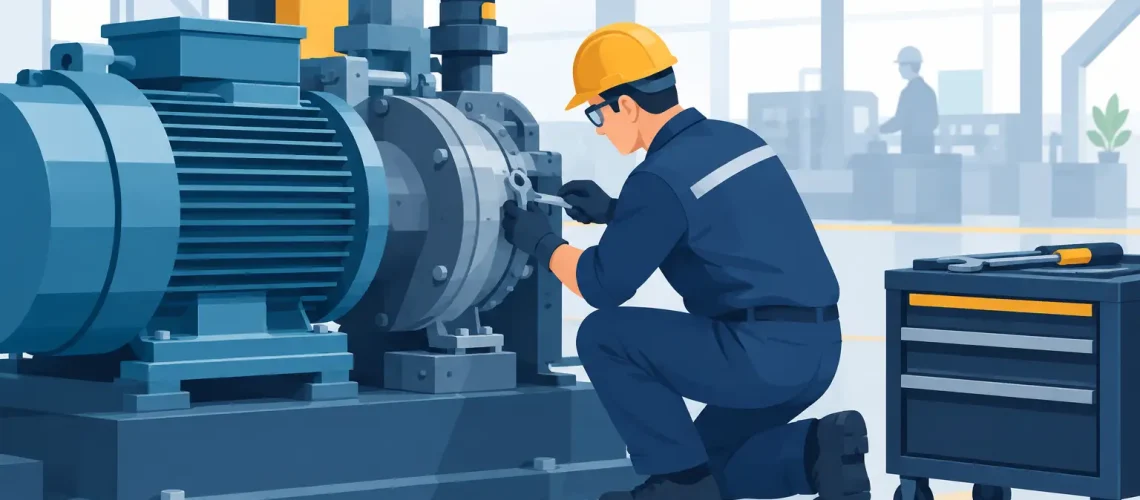
Effective inspections are structured. A technician should look for unusual vibration, heat discoloration, loose terminals, worn cables, leaking seals, irregular fan noise, slow actuator movement, unstable temperatures, clogged filters, and inconsistent pressure or spray patterns. These signs are often present before a machine reaches a failure point.
Operators also play an essential role because they see the equipment every shift. When operators know which changes to report, maintenance teams can respond earlier. A short cycle delay, a new odor, a temperature fluctuation, or a door that requires extra force may seem minor, but each can indicate a developing issue.
What a Complete Service Visit Should Cover
The depth of a service visit should match the equipment, but the outcome should be clear: the facility needs to know what was checked, what was found, what was corrected, and what requires follow-up. Vague reports make it difficult to plan budgets, manage risk, or demonstrate maintenance control during an internal review or audit.
For thermal and hygiene machinery, a complete visit commonly examines four connected areas:
- Mechanical condition, including fans, motors, bearings, belts, hinges, seals, pumps, valves, fasteners, and moving assemblies.
- Electrical reliability, including control panels, wiring, terminals, contactors, overloads, sensors, grounding, alarms, and safety interlocks.
- Process performance, including temperature stability, airflow, pressure, cycle timing, wash coverage, heating response, and control accuracy.
- Safety and cleanliness, including guards, emergency stops, ventilation, insulation, drainage, filters, residue buildup, and accessible cleaning points.
After inspection, the service provider should separate immediate corrective work from recommended improvements. A loose electrical terminal or failed safety device requires prompt action. A component approaching its expected wear limit may be scheduled during the next planned shutdown. This distinction allows facilities to act responsibly without replacing parts prematurely.
Calibration and Controls Deserve Equal Attention
Mechanical maintenance often receives the most attention because wear is easy to see. Yet controls and instrumentation can be just as decisive. If a temperature sensor reads inaccurately, the control system may respond correctly to incorrect information. The display may show an acceptable setpoint while the actual process temperature is outside tolerance.
Calibration checks are especially valuable where heating, drying, curing, sterilization, or sanitation results must be consistent. The required accuracy depends on the application. A general drying process may allow a wider operating range than a controlled cure cycle or hygiene-critical sterilization process.
Control panels also require regular inspection. Dust, heat, moisture, loose connections, overloaded circuits, and aging components can affect reliability. Keeping panels clean, properly ventilated, labeled, and accessible supports faster troubleshooting and safer service work. Where equipment has been expanded or modified over time, the electrical design should be reviewed to ensure the controls still match the operational load and safety requirements.
Spare Parts Strategy: Avoid Both Extremes
Keeping every possible part in inventory ties up capital and can lead to obsolete stock. Keeping no critical spares can turn a simple repair into days or weeks of downtime. The practical middle ground is to identify parts with a high operational impact, a long lead time, or a predictable failure pattern.
Facilities should consider holding approved spares for items such as sensors, heating elements, contactors, fuses, belts, bearings, seals, filters, valves, pumps, and control components where appropriate. The exact list depends on the machine design and availability of local support.
Using correct parts matters. Substituting a lower-rated electrical component, an unsuitable seal material, or a non-matched heating element may restore operation temporarily while creating a larger safety or performance problem later. For custom machinery, access to the original design knowledge is particularly valuable because components and settings may be specific to the application.
When Maintenance Should Lead to Improvement
Maintenance should not become an excuse to keep an inefficient process unchanged. Repeated failure of the same component, persistent energy waste, unstable cycle results, or difficult cleaning procedures may indicate that the machine needs modification rather than another routine repair.
Possible improvements include upgraded insulation, improved airflow design, revised controls, more suitable sensors, easier-access service points, better filtration, improved drainage, or automation that reduces operator variation. The right choice depends on production volume, equipment age, required standards, and the cost of disruption.
REK Engineering Machinery approaches maintenance with this broader engineering perspective. Service findings can inform practical upgrades for custom equipment, helping facilities improve durability, process consistency, and long-term operating efficiency instead of treating every issue as an isolated repair.
Build Accountability Into the Maintenance Program
A maintenance program works best when responsibilities are defined. Operators should know how to perform routine checks and report abnormalities. Facility teams should manage cleaning, basic inspections, and service scheduling. Qualified technicians should handle electrical, control, calibration, and safety-critical work. Management should review recurring issues and make decisions based on downtime, repair history, quality results, and operational risk.
Clear records support all of these roles. Document service dates, findings, corrective actions, replaced components, calibration results, and recommended follow-up work. This information is useful when planning shutdowns, assessing equipment life, responding to audits, and evaluating whether a repair or replacement is the better investment.
The best industrial machinery maintenance service does not simply return equipment to operation after a fault. It gives plant teams confidence that the machine can perform its intended work safely, consistently, and efficiently through the next production cycle and beyond.